What’s the Right Choice for Your Esthetics Career?
If you’ve started researching how to become an esthetician, you’ve likely come across the idea of an online esthetician program. On the surface, it makes sense—flexible hours, no commute, and the ability to learn at your own pace.
But esthetics isn’t just something you study. It’s something you do. And the way you train will shape not only what you know, but how confidently you can apply it when it actually matters—on a real client.
Before you commit to any program, it’s worth taking a closer look at what online vs. in-person and hands on training can offer—and where online training falls short.
Why Esthetician Programs Online Are So Appealing
There’s a reason so many prospective students start here. Online learning feels accessible. It fits around work schedules, family obligations, or the uncertainty that often comes with exploring a new career path.
For someone testing the waters, that flexibility can feel like a smart, low-pressure entry point. You can learn terminology, understand basic skin science, and start to get a sense of whether the industry is a good fit.
And for many, that’s exactly how the journey begins—not with full commitment, but with curiosity.
The problem is, esthetics doesn’t stay theoretical for long.
Can You Become a Licensed Esthetician Online?
This is where expectations and reality tend to diverge.
You cannot become a licensed esthetician through a fully online program alone. Licensing requirements across states are built around supervised, hands-on training hours—time spent performing treatments, working with real skin, and learning under direct instructor guidance.
That includes core services like facials and dermaplaning, waxing and hair removal, extractions, and advanced treatments such as chemical peels. These advanced courses teach skills you can can’t absorb passively. They require repetition, correction, and a trained eye to guide you in real time.
Online education can support your understanding of the “why.” But licensure—and more importantly, competence—comes from the “how.”
Where Online Training Can Be Useful
To be fair, online esthetician training does have a place.
It’s a practical way to build foundational knowledge: skin anatomy, product ingredients, and general industry language. If you’re still deciding whether to pursue esthetics seriously, it can be a helpful first step.
The flexibility is real. So is the convenience.
For instance, at Academy of Skin and Beauty, we have a few courses that require online training to start, and then in-person sessions to put their knowledge into practice. A few examples are:
- Laser Hair Removal Course
- Sugaring Hair Removal Course
- Chiromassage IQ Course
- Our Powder Brows & Lip Blushing Courses come with 6 months of access to additional online training after course completion.
But at some point, every serious student runs into the same limitation: knowledge without application only goes so far.
The Gap Between Knowing and Doing
Esthetics is tactile. It’s precise. It’s built on subtle technique—pressure, timing, movement, and the ability to adapt to different skin types in real time.
That’s where online training starts to fall short.
Watching a treatment is not the same as performing one. You don’t develop muscle memory through observation alone. And without immediate feedback, it’s difficult to know if what you’re doing is correct—or just close enough to feel convincing.
This often leads to a second, more important gap: confidence.
Students who begin with online learning frequently understand the steps of a service but hesitate when it comes time to execute. That hesitation matters. Clients can feel it. And more importantly, it affects how you feel about your own readiness.
Confidence in esthetics isn’t theoretical. It’s earned through doing the work—repeatedly, under guidance, until it becomes second nature.
Why Hands-On Training Changes Everything
When you step into a hands-on training environment, the experience shifts immediately.
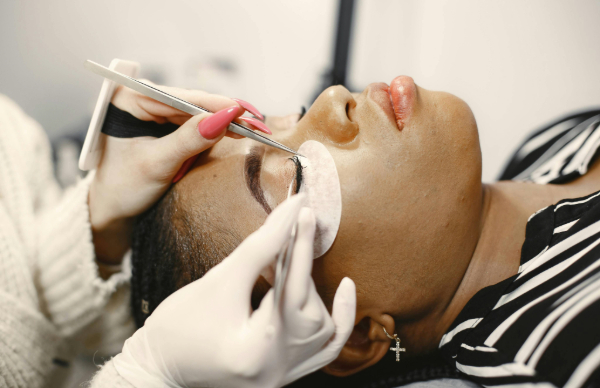
You’re no longer interpreting what something should feel like—you’re experiencing it. You’re practicing techniques with intention, receiving corrections in the moment, and refining your approach with each repetition.
That kind of learning builds more than skill. It builds clarity.
You begin to understand not just what to do, but why it works—and how to adjust when it doesn’t. Over time, that consistency translates into confidence, and confidence translates into professionalism.
By the time you complete a strong hands-on program, you’re not guessing your way through services. You’re performing them with purpose.
Preparing for Real Work, Not Just an Exam
Licensing exams are one milestone, but they’re not the end goal.
The real measure of your training is what happens after—when you step into a treatment room, interact with clients, and start building your career. Employers aren’t just looking for someone who passed a test. They’re looking for someone who can perform services comfortably, communicate clearly, and carry themselves with professionalism.
Hands-on training prepares you for that environment in a way online learning can’t replicate.
It gives you experience with real clients, exposure to different skin types, and the ability to adapt in real time. Just as importantly, it helps you develop the presence and confidence that clients trust.
Who Benefits Most from In-Person Training?
While hands-on education is essential across the board, it becomes especially valuable depending on where you’re starting from.
If you’re changing careers, structured, in-person training provides the support and accountability that make the transition feel realistic rather than overwhelming. You’re not left piecing things together—you’re guided.
If you’re coming straight out of high school, it offers a clear, focused path into a profession without the ambiguity of traditional routes. You’re building real skills from day one, not just sitting through theory.
And if you’re already licensed, advanced hands-on training is what allows you to evolve—adding new services, refining technique, and staying competitive in an industry that moves quickly.
The Academy of Skin and Beauty Approach
At Academy of Skin and Beauty, the focus is straightforward: training that translates directly into real-world ability.
That means prioritizing hands-on learning from the beginning, keeping class sizes intentionally small, and creating an environment where students can practice, ask questions, and improve without hesitation.
It’s not about collecting certifications or rushing through material. It’s about developing technique, building confidence, and leaving with skills you can use immediately—whether that’s with your first client or your next one.
The difference is subtle when you’re researching. It’s obvious when you’re in the room.
Online Esthetician Programs vs. In-Person Training: The Bottom Line
Online esthetician programs offer flexibility, and for some, they’re a reasonable starting point. But they’re not a complete path to a career.
If your goal is to become licensed, feel confident performing services, and step into the industry ready to work, hands-on training isn’t just helpful—it’s necessary.
The real question isn’t which option is easier. It’s which one actually prepares you for what comes next.
Ready to Take the Next Step?
Choosing an esthetics school or training program is one of the most important decisions you’ll make in your esthetics career. It shapes not just your education, but your confidence, your skill level, and your trajectory in the industry.
If you’re considering your options, the best next step is simple: see the difference for yourself.
- Schedule a tour
- Learn more about our 600-hour esthetician licensing course.
- Learn more about our 75-hr waxing licensing course.
Because the right training doesn’t just teach esthetics. It prepares you to build something with it.
FAQs: Esthetician Programs Online vs. Hands-On Training
Can I really become an esthetician completely online?
Short answer: no. Every state requires hands-on training hours to qualify for licensure. You can study theory online, but at some point, you’ll need supervised, in-person practice to legally work on clients.
Are online esthetician programs worth it at all?
They can be—depending on your goal. If you’re exploring the field or want to learn skincare basics, online training is a low-commitment way to start. But if your goal is to work professionally, it’s only one piece of the process—not a complete path.
Why is hands-on training such a big deal in esthetics?
Because technique matters more than people expect. Things like pressure, product application, and timing aren’t intuitive—you develop them through repetition and feedback. Watching a video can’t correct your hand positioning or help you adjust to a real client’s skin.
Do employers care if I trained online vs. in person?
They care if you’re job-ready. Most employers expect new estheticians to be comfortable performing services from day one. If your training didn’t include real client experience, you may feel—and appear—less prepared in interviews or practical trials.
What do students struggle with after online-only training?
The biggest gap is confidence. Many understand the steps of a facial or waxing service, but hesitate when it’s time to actually perform it. That hesitation usually comes from not having enough guided, hands-on practice.
Is it faster to go the online route?
It can feel faster upfront, but often takes longer overall. Students who start online frequently need to go back and complete hands-on training anyway to meet licensing requirements. Starting with a comprehensive program can save time in the long run.
Can I combine online learning with hands-on training?
Yes—and that’s often the most practical approach. Learning theory online while developing your skills in person can work well, as long as the hands-on component meets your state’s licensing requirements.
What should I look for in a hands-on esthetics program?
Focus on how much you’ll actually practice. Look for small class sizes, access to real clients or models, and instructors who give direct feedback. The goal isn’t just exposure—it’s repetition until you feel confident.
I’m nervous about working on real people. Is that normal?
Completely. Most students feel that way at first. The difference is whether your training environment helps you move through that discomfort with guidance and support, rather than leaving you to figure it out alone.
Will I feel ready to work right after graduating?
That depends on your training. Students who complete strong hands-on programs typically leave feeling prepared to start working. Those without that experience often need additional practice before they feel confident charging for services.
Is online esthetician training cheaper?
Usually, yes—but it’s not always more cost-effective. If you end up needing additional hands-on training later, the total investment can add up. It’s worth thinking in terms of value, not just upfront cost.
What’s the biggest mistake people make when choosing a program?
Choosing based on convenience alone. Flexibility matters—but this is a skill-based career. The quality of your training will directly impact how confident and capable you feel once you start working.